Posted by: Pam B. Newberry | March 5, 2012

February and March are Hard Months for Bees

Hello Everyone…

Brrrr! It is cold out there!

The weather these last few weeks has definitely been bizarre here in the states. This past weekend the tornadoes wrecked havoc and mayhem all around us. We were definitely blessed that the path of the tornadoes dissolved away just about the time they were to arrive in our little part of the world. As they say around here,”We missed a bullet, for sure!”

So, how are the bees, I bet you are wondering.

Take a look for yourself! The following pictures were taken February 28 on a nice warm day. Pollen is popping out on sugar maples and willow trees and loads of spring bulbs. Look closely at the bees and you’ll notice their little hind legs are just full of the “good stuff.” And, with the warm temperatures, the little ladies were having great fun flying in and out with such speed. To paraphrase Chef Emeril Lagasse, I wish these pictures had ‘hear-a-sound’ as the buzz of the hives was something to hear.
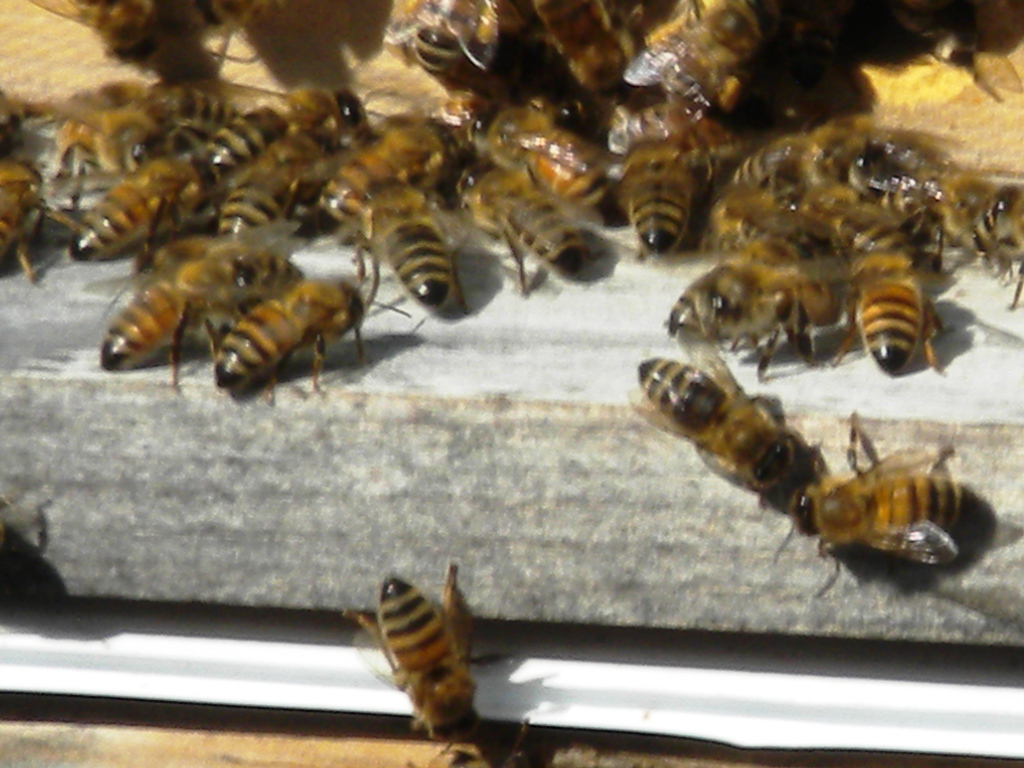
Figure 1: Bees are coming out of the hive quickly to take cleansing flights and to forage for food.
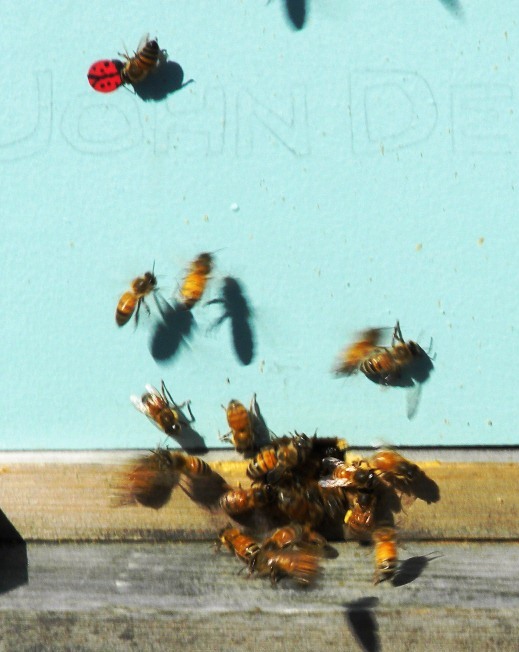
Figure 2: Hive 3 - Bees are flying in and out as fast as they can!

Figure 3: Notice the blurred bee flying to the hive? See how its hind legs are heavy with pollen.

Figure 4: Oh, look at the "yellow gold" the bees have found!
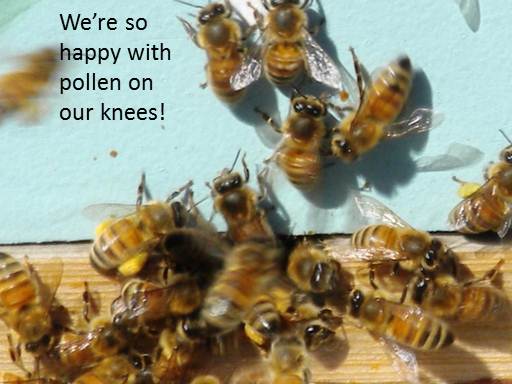
Figure 5: Pollen on My Knees -- see related blog posted earlier
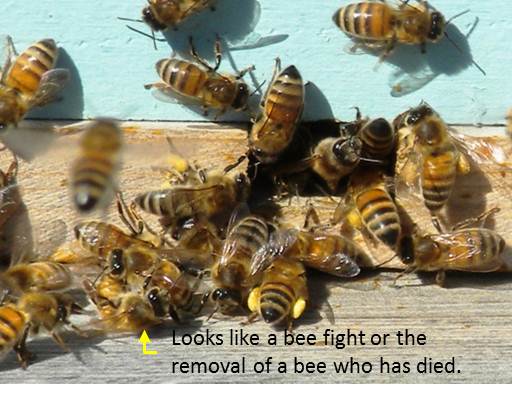
Figure 6: Notice the two bees where the arrow points; it appears they may be fighting or the bee on its back has died and it is being removed from the hive. Notice the pollen on the legs of the other bees.

Okay, now, what do you think? Hobbit King and I believe our little ladies are doing just fine. We took these pictures and showed them to our Bee Mentor and he agreed. We learned that if we keep watching over them these next few weeks and we prepare to provide them a little extra food, if the weather turns bad, like it has these last few days, the hives will continue to do well.

Why would you think it would be hard on the bees during this time of year when some plants are beginning to bud out and we are about to have Spring? It is because the hives have begun to produce their young. The Queen began laying eggs most likely back near the end of January or early February. It takes about 21 days for new ones to emerge.

This is critical for the survival of the hive as the “winter” bees are about spent. They have worked all winter to keep the hive warm and to protect the brood the Queen laid prior to winter. Those bees are tired and are about ready to give up their last breath of life. That is why when it snows during this time of year, you will often find lots of dead bees at the base of the hives. The hive is beginning its new cycle. The older bees are making way for the young.

A hive is most healthy when its life cycle provides a steady replacement of young to old without producing too many of either too fast. With the influx of new bees, rearing of brood, and the dying off of older bees, the honey stores that was prepared last fall will be eaten quickly. The more mature bees will need to forage for large quantities of pollen in order to make the “bee bread” for the brood as well as feed the emerging new bees, who will be hungry and ready to work.

It is amazing that all of this activity is happening while the world around the honey bee is full of cold winds, blistering rains and snows, and in some areas damaging and killing storms.

The honey bee continues to marvel Hobbit King and I. Each time we visit the hives we are so excited to see what may happen with them next.

Recently, we were also inspired while listening to Gunther Hauk, founder of the Spikenard Farm and Honeybee Sanctuary, during a recent Mountain Empire Beekeepers Association (MEBA) meeting. Gunther shared a few of his experiences, his philosophies, and his dream for all who want to help the honey bee. If you have not visited his website, I encourage you to do so.

If you happen to raise bees, I also encourage you to purchase his “Bee Tea.” You can also do as I am planning to do, and that is grow the flowers and herbs he recommends on his website and make your own “bee tea!” This bee tea is for the BEES! Gunther told us how he developed this mix to feed his bees. He said that when you mix it with some of their honey, it provides them with good, healthy, food that will help them build a strong hive. Hobbit King and I plan on trying it out this spring.

This week Hobbit King and I will begin building the next set of frames for the hives. We will need to prepare a second super each hive for the bees to grow into, store their honey, and then we will see how well we do. With any luck, we’ll be harvesting some honey for us to try in early summer. Keep your fingers crossed for us and check back and see how we are doing. Now that the break is over for us beekeepers, the plan is to post more news more often.

Honeybee Hives at Hobbit's Bend Farm

Honey Cheers to you and yours,
Hobbit Queen

Posted by: Pam B. Newberry | January 12, 2012

A New Year – A New Beginning – It’s Cleansing Time!


Honey bees do a remarkable thing in the winter. They hold it! Yep, that is what I said. They hold it! They don’t go to the bathroom in their hive. They wait until a warm day (i.e., temperatures must be at least above 55 degrees F) and they take what beekeepers call “a Cleansing Flight.”

If you know of a beekeeper, find out when you can go visit his or her hives on a nice warm day in winter and you’ll be amazed. And, if you have a vehicle that you’ve noticed little, tiny black dots on it during a warm day in winter, those dots are a result of a cleansing flight by honey bees near by.

A few days ago, we captured in the picture (Picture 1), the bees taking flight on a nice warm day . If this were a video, you’d see that as fast as the bees fly out of the hive, they fly back in. They don’t dilly-dally around. They get down to business, do their business, and get back to helping keep the brood and the rest of the hive warm.

Picture 1 - Hive 2 w/Honey Bees in Cleansing Flight

This hive is what we refer to as Hive 2. It looks healthy and there seems to be a lot of bees scrambling out of the small hive opening. We narrow the hive opening in order to reduce the loss of heat and to keep vermin, such as mice out of the hives.

The next picture of Hive 3 seems less active. This hive, in late summer/early fall, we placed a second super on with frames. Our bee mentor said he was afraid we may have done that too late and now we think he may have been right. The hive grew too big, too fast. We think we may have had a late fall swarm. Since we are young beekeepers, we didn’t recognize when a swarm happens  or realize it. Now, it appears this hive is smaller in numbers, which makes it hard for the bees to make it through the winter. We hope we are wrong. (See Picture 2)

Picture 2 - Hive 3 w/Honey Bees in Cleansing Flight

Honey bees need several things in order to make it through the winter. They need about 60 lbs. of honey stored; a large number of winter bees to protect the brood and keep the hive warm; and they need a well established brood and hive that is healthy so that the stress of winter does not reduce the hive in number any more than is necessary.

A “warm day opportunity” and a warm day in winter is looked upon as an opportunity for the beekeeper just as it is a cleansing time for the honey bee. This day is opportune because the beekeeper can help stack the odds in favor of his or her bees by giving them a supplemental feeding and it gives him or her a chance to check on the hives to make sure the hives are faring well.

Hive One (shown in Picture 3) shows a feeder in place on top of the hive body. The bees have been using propolis to varnish the wood, cracks, and crevices carefully filling them so that no noxious life forms may live in the hive and pose a hazard to the bees. Propolis also waterproofs the inside of the hive and protects the hive from attack by invaders, such as bacteria, molds, yeasts, fungi, insects, and other pests. In the picture, notice the tops of the frames have some honeycomb being built. You’ll also see a slight sheen in the edges of the super as it aligns with the hive body. The bees have been working to seal the two boxes together. When we left the feeder in the hive and came back a few days later, we found the bees had begun to seal the feeder to the frames using propolis.

Picture 3 - Hive One showing inside of hive

Another amazing fact that Honey Bees use propolis is to encompass a large animal in the hive, such as a snake or a mouse. The bees can’t move the large animal out of the hive, so they remove body hair from the animal, cover it with propolis, and it will reduce the odor of the decaying animal as well as reduce microbial growth. This protects them and if I were to come across something like that I do believe I’d stay away from that hive. Wow!

The fascinating part of beekeeping so far has been learning how efficient the honey bee is in all things. The picture of Hive 2 (See Picture 4) shows just how busy the little ladies are even in the cold of winter. When we placed the two supers on top of the hive body to provide a place to keep the feeder when we feed, the tops of the frames were free of any honeycomb or traces of activity by the bees. If you look carefully at Picture 4, you’ll see the bees have built a lot of honeycomb and used the propolis. They only do this on warm days as when the temperature is below 50, they must tend to the brood and work their wings to circulate heat to keep the hive at a constant temperature of 92 degrees F.

Picture 4 - Hive 2 inside of the hive

Warm periods in the winter are very important for two main reasons, first the bees must periodically break the cluster they form to protect the hive and gorge on their honey stores or they will starve. It is the honey and their fat bodies that provide the energy for warming the cluster interior to the needed temperature to protect the brood. Second, a warm period provides for the cleansing flight to allow the bees to void their feces. Any older bees will be found dead on the snow after such winter flights. Because we’ve not had too much snow this year and many warm days so far, we’ve not seen that many bees perish. It doesn’t mean they haven’t, it just means we haven’t seen much evidence close to the hives. Since the ones who perish tend to be older bees, it is not a serious situation as their time with us is limited and they have already provided a great service to their colony.

Picture 5 - Hive 3 inside of the hive

Picture 5 shows the interior of Hive 3. This hive is the one mentioned earlier that we fear had a late, fall swarm. It is also our largest hive with an extra super including frames full of honey. Hobbit King and I have a bet going on. He thinks the hive is weak due to the fall swarm. I think the bees are just fine and that their number is far greater than it appears. You see, we haven’t checked down below this upper super, so we really don’t know if the lower hive body is small in number or booming with bees.  Hobbit King is currently sitting in his easy chair dreaming of how he’ll spend his winnings when we find out this spring.


Picture 6 - Hive 4 inside of hive with lots of bees - Should we be worried?

Notice how full Hive 4 looks. (See picture 6). This hive was a very weak hive, or so we thought. It is just buzzing with activity and the bees look like they are outgrowing their home. Or are they? Could they be out of food and the cluster has moved to the top? We don’t know. We will need to keep a close eye on this hive as March nears or if the weather stays warmer than normal as a swarm may happen when we are not looking or worse the little ladies could starve. It could result in us loosing our hive before we are prepared to prevent it.

It is a new year for our honey bees. They are working through the cold days to keep the hive protected and warm while preparing for the arrival of spring.

Long, cold winter days and nights are ideal for beekeepers to talk and read about bees. Hobbit King and I are making plans and goals for beekeeping chores to come this spring. January is a good time to reflect on how the hives did the previous year and assemble or repair beekeeping equipment. It is also a great time to attend a beekeeper meeting. We’ll “bee” going to our MEBA meeting in a few weeks. Until then, reflect on your past year, ponder what changes you need to make, prepare for spring arrival, and learn from the honey bee!

Always with Honey Cheers,
Hobbit Queen

P.S. Be sure to vote if you like this blog post. It sure helps with the ranking. And, sign-up to follow along…Happy Cleansing Flights To You!

Posted by: Pam B. Newberry | December 19, 2011

Merry Christmas and Happy New Year!

Honey Bee foraging on cherry blossom - March 2011

Hopes for spring are in our hearts. This honey bee is forging on a cherry tree blossom. In the spring, the tree hums with the sound of hundreds of honey bees as well as other nectar loving flying insects. We are looking forward to seeing these blossoms again in 2012.

So far, we’ve not had the snow cover we had by this time last year. The picture below was taken on December 8, 2010:

Backyard view with temperature at 20 degrees F - Burrrrrr!

The bees are staying in their hives as the temperature is staying below 50 degrees F. We hope the winter stores of honey are holding up.

Miss Beehaven with Hobbit Queen will be on holiday break. We will return with more beekeeping tales to share sometime the week of January 09, 2012.

Until then, may the time of the season be a blessing to you and your family and may your wishes for the new year be all that you hope for and more!

Honey Cheers to you and yours!
Hobbit Queen

« Newer Posts - Older Posts »

Categories