The life of a bee is a fascinating tale that the more Hobbit King and I learn, the more intrigued we become. Recently, while reading ABC & XYZ of Bee Culture, Hobbit King shared an article about the life cycle of the honey bee. In previous blogs, I’ve shared what we’ve learned from the two bee classes we took, but this article shared some new insights we thought you’d enjoy hearing about.
For instances, “…on average a worker will die after flying about 800 kilometers (480 miles).” Four hundred-eighty miles! Wow…I’m happy I find time to walk 1-mile a day (365 miles/year). The worker honey bee does 480 miles in its short life of 30 or so days. What is even more amazing is that the reason the worker bee only lasts 480 miles is that “at this point the cells are worn out and have accumulated a sufficient quantity of waste material that they cannot function properly.” It raises the question just what do honey bees do?
The seasons of a honey bee do not exactly align with a humans. The typical four seasons for a honey bee cycle similar to the following:
- Mid to late January begins a honey bee’s spring — early warm days, the bees begin building brood and foraging as warm days permit
- Spring continues until about late April – early May
- Summer for the honey bee begins mid to late May through early to late July– this is when the largest majority of the flowers of nectar and pollen are producing
- Fall soon comes with mid to late August through Mid-October
- Winter begins to keep the bees in the hive mid-October through mid January
(NOTE: This cycle is common for the Appalachian region and is one example of the season cycle for a honey bee. The region or portion of the world where a honey bee lives will obviously adjust this cycle as it is dependent on the temperature and weather.)
The life (~four to six weeks) of a spring honey bee (those produced in the spring) depends on what she does. Worker bees spend about half their life (~15 days) tending the hive and the remaining half foraging. “Foraging takes much more energy than does in-hive work.”
You might wonder why honey bees don’t just tend the hive as much as they can. In-hive work totally depends on the quality of the hive and the nectar and pollen flow. If there are plenty of worker bees to care for the brood, the honey bee worker knows she is not needed. If there is no storage space for the foraging collection, then the worker bees will not forage. It is a balancing act to care for the hive and those lovely ladies just know to do only what is needed when it is needed.
What about the male bees you ask? Well, the drone (male bee) doesn’t really work at all. He flies around for a few hours hoping to mate with the Queen, but then if he doesn’t, he continues flying a round until worker bees refuse to feed him in the fall and boot him out of the hive. His life cycle is extremely small. The Queen on the other hand, has it pretty good. She can live several years, mates once, and lays eggs the rest of the time. Evidently, the production of eggs doesn’t harm the bee’s body cells as foraging and cleaning seem to do to the worker bee.
Diseases and infestations of mites also determine how long worker bees live “…because it may be sufficiently debilitating to reduce the length of life.” The good news is that a good “…honey flow will do much to cure or improve a disease situation in a honey bee colony…” by giving the hive a chance to rid the hive of those bees that are ill. The worker honey bees fly out to forage and the stress of the forage adds to the exhaustion causing them to die away from the hive, thus doing a natural cleansing of the hive.
Winter bees are those bees born in the fall and will survive through much of the winter (~four to five months) as their work requirements are all within the hive. There is no foraging as when a bee flies out into weather colder than 50° F, she will die. And, a winter bee’s body is designed differently for the work of winter, which is limited feeding of the brood (the brood is also at its smallest size) and mainly their function is to keep the hive warm and the brood protected.
The work level of the honey bee is unlike us humans, as a honey bee ages, she does not reduce her performance level even up until the day she dies. She produces as much for the hive as she can and makes her life be the most productive.
Lessons, we as humans, can surely learn. In the past, those of us aging and moving into the later years of life that have worked hard during the younger years have often looked upon the days of retirement with glee. We saw it as an opportunity to kick back and enjoy our labors. But, now that those days are dawning closer, what I find is that as many of us (me and my friends included) become more in number of “the age of retirement” and less in “the age of youthfulness,” we are not retiring. News reports state it is because of the need for income, which is part of the issue. The other issue, at least, I believe at this point, is the desire to still be productive and needed. Much like the honey worker bee. We want to be useful to our “colony.”
There are examples of where making a difference in the human world is becoming more a part of society, an expectation, and less of an “option” thing that you might decide to do. Leaders of the U. S. have begun to model this approach. I think of Presidents who have left office to go on and do humanitarian deeds, such as Carter, Bush the First, and Clinton. These and many other individuals of the baby boomer age are doing what they can to make a difference. Yet, it is not all of us. The more we can do (being such a large population) the more difference we can make. It’s work thinking about.
UPDATE of HIVE Building at Hobbit’s Bend
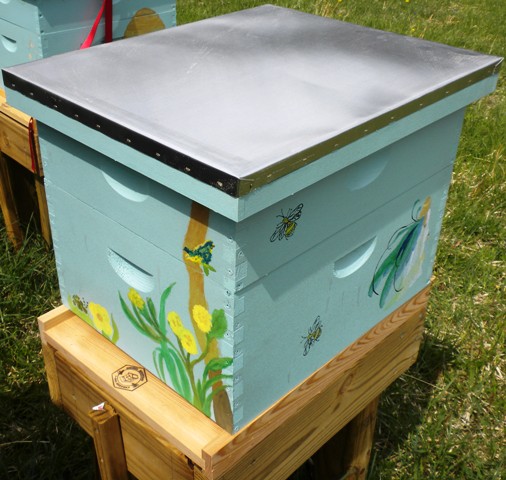
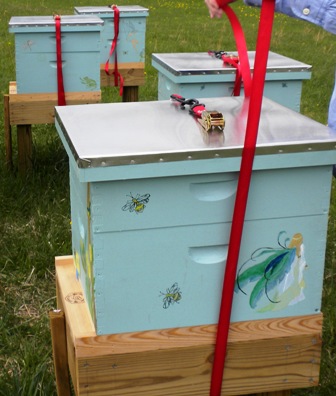
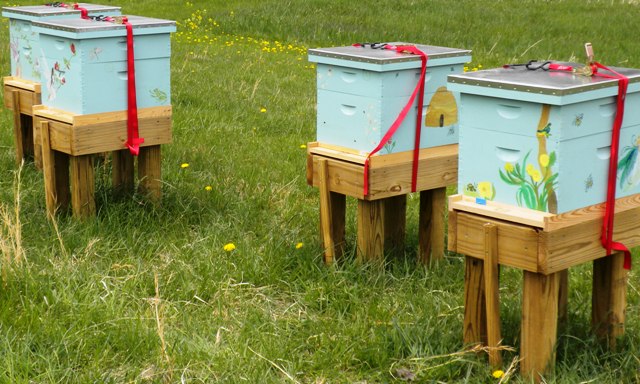
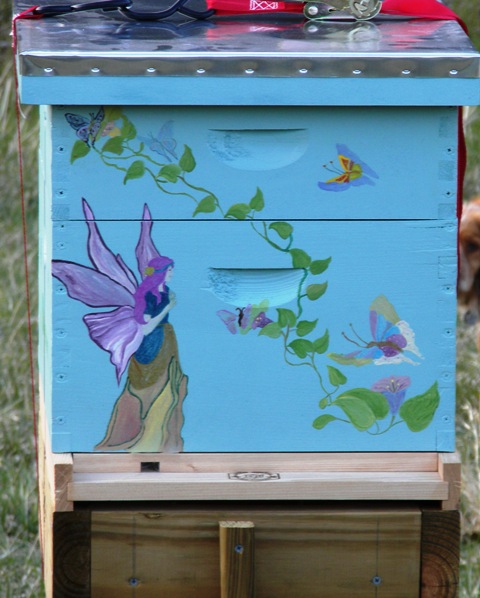
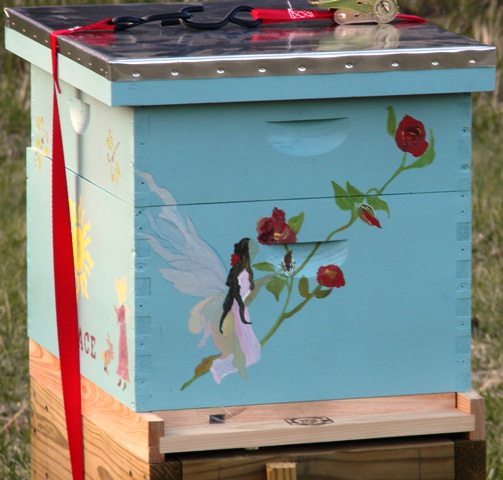
It is hoped we will acquire our bees the end of April or first week of May. Hobbit King and I have been working very hard at getting the hives ready. Princess Daughter helped so much sketching out the basic design, while I worked to finalize the decorations. We have two hives completed and staged on the stands. Two more hives are being readied for placement. The following pictures show the design of two of the hives as we move closer to receiving the nucs:
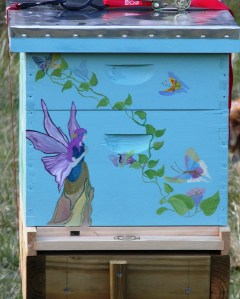
Hive One ready to receive nuc...painted by Hobbit Queen

Hive Two ready to receive nuc...painted by Hobbit Queen
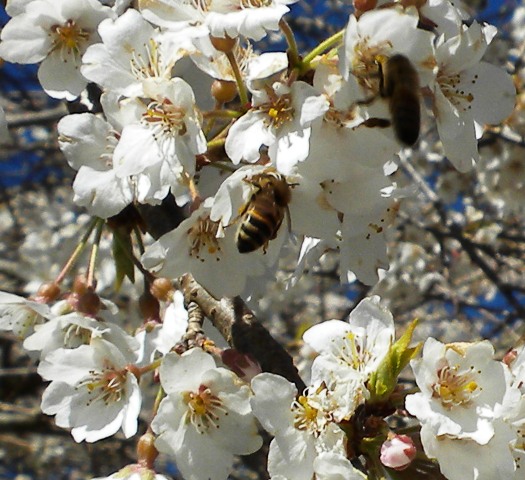
The next two pictures show honey bees actively foraging on a Japanese Weeping Cherry Tree today (4-03-2011) during a wonderful spring day with no too much breeze. I wish you could hear the sound of the hum of the tree as it was covered with bees working away. You kind of “hear” how hard they work.

Honey Bees foraging on Cherry Tree 4-03-2011

Honey Bees Foraging -- Another View
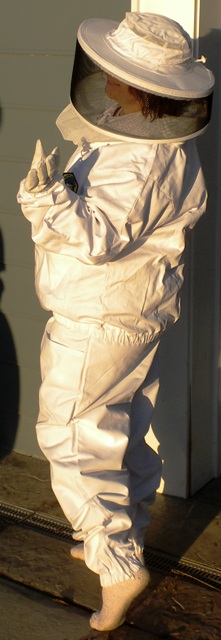
Hobbit King and I have purchased our beekeeper’s suits. Here is one picture of the suit being modeled for you. We’re not sure how long we’ll wear the pants, but for now, we thought we’d try using them as honey and propolis stains clothes and is very hard to remove. This particular suit fits over our working clothes, so it makes it nice to slip in and out when working ont he hives. We’ll see how well we do using them.
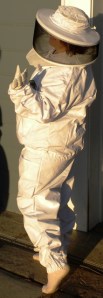
Suited up for Beehiving...
I have a horrible case of claustrophobia and so being able to put on the complete suit is a major step forward for me. Please send me good luck on being able to overcome my fears. I know, I shouldn’t have the issue, but alas I do. Send good vibes anyway. Please!
Spring is coming to the mountains and it is exciting. Here’s hoping you have an awesome week and all your spring wishes come true!
Honey Cheers,
Hobbit Queen











 Miss Beehaven with Hobbit Queen